
Kimchi Benefits: What Unpasteurised Fermented Kimchi Can Add to Your Diet
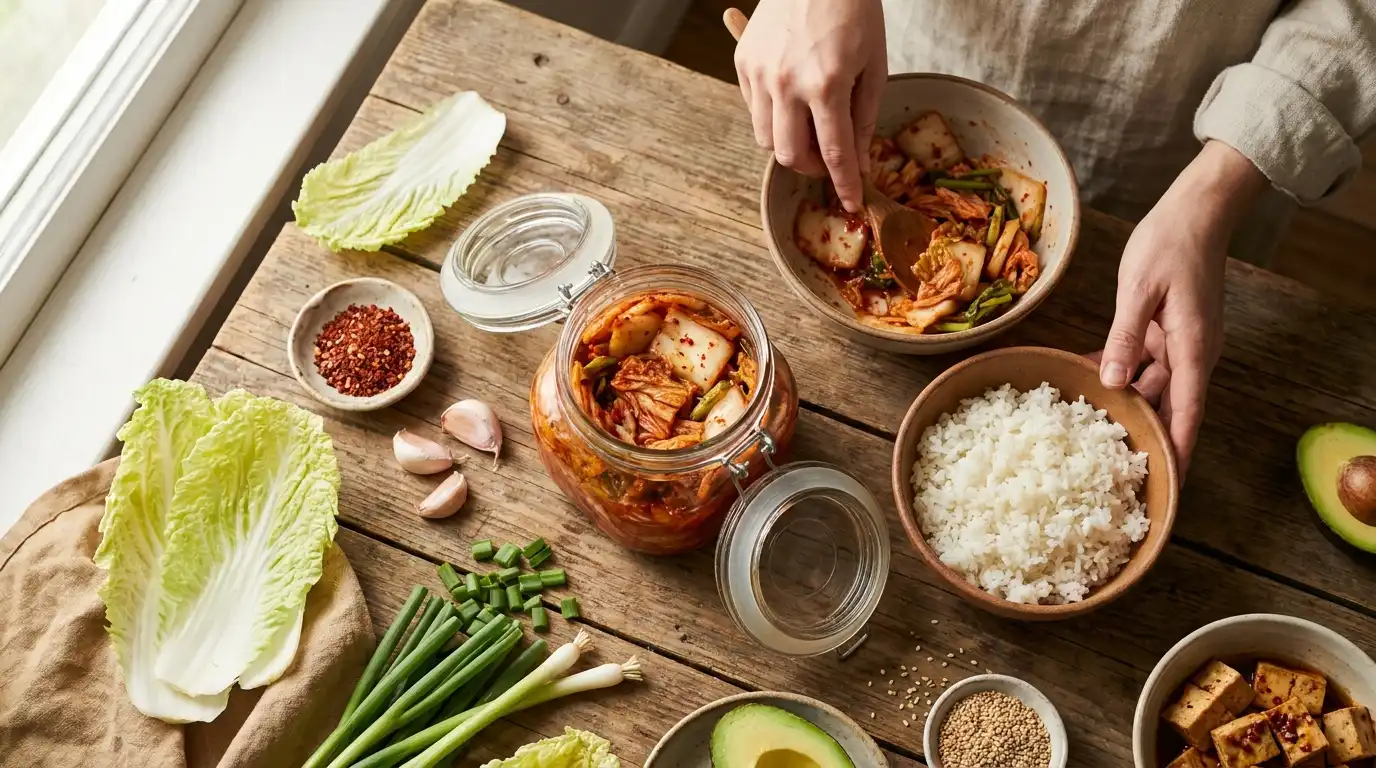
If you’ve been spotting more jars of kimchi around Barcelona lately, it’s probably not just your imagination. More people are reaching for bold, living foods that feel like more than a small side dish. They want strong flavor, and they also want food that feels fresh, simple, and easy to add to everyday meals, which honestly explains a lot of the appeal. That helps explain why kimchi benefits are getting so much attention right now.
Kimchi is a traditional Korean fermented food made with vegetables, salt, seasoning, and time. When it’s unpasteurised kimchi, it may still contain live cultures that develop during fermentation. That’s one reason so many health-conscious shoppers are curious about possible kimchi benefits. They’re trying to work out what this spicy, tangy food might actually add to their diet, and whether it really lives up to the hype.
This guide looks at what unpasteurised fermented kimchi may offer and what current research says so far. It also covers how to choose it, how to store it in the fridge, and how to serve it at home with rice bowls, eggs, or noodles. Food safety matters here too. Vegan concerns are included as well, along with easy meal ideas for busy people in Barcelona who want authentic Korean flavor without making things more complicated than they need to be. So whether someone is new to kimchi or already buys it often, this article is here to help them use it with confidence, without overthinking it.
Why unpasteurised kimchi benefits get so much attention
Not all kimchi is the same, and for many shoppers the main difference is whether it is pasteurised or unpasteurised. Pasteurisation uses heat so kimchi can stay shelf-stable longer, but that heat can also reduce or remove the live microbes that are often the main reason people care about fermented foods in the first place. With unpasteurised kimchi, fermentation stays more active, especially when the jar is kept in the fridge, where those live cultures usually keep changing over time.
That helps explain why so much research looks at kimchi as a source of lactic acid bacteria, or LAB. A 2023 review found that average kimchi intake could provide 10.11 log CFU LAB per day. That is a pretty striking figure. Put simply, kimchi may be a meaningful source of live bacteria when it is still actively fermenting and has not been heat-treated, at least in many cases.
Some researchers now describe kimchi as both a probiotic food and a postbiotic food. That means it may provide live microbes along with useful compounds formed during fermentation. A 2024 review in the Journal of Ethnic Foods also connected kimchi with possible antioxidant benefits, effects on the microbiome, and immune-related benefits. Even so, it said health claims should stay careful and realistic, which is often the most sensible way to read this kind of research.
For everyday eating, the takeaway is fairly simple. If someone wants a fermented food with live cultures, refrigerated and unpasteurised kimchi is usually the more relevant choice.
| Kimchi Research Snapshot | Value | Year |
|---|---|---|
| Average LAB intake from kimchi consumption | 10.11 log CFU/day | 2023 |
| Human study participants | 23 | Reviewed study |
| Kimchi intake in one study | 60 g x 3 daily for 8 weeks | Reviewed study |
| Countries receiving Korean kimchi exports | 95 | 2024 |
These numbers do not prove kimchi will affect every person in the same way. They do, however, help explain why this fermented food gets so much attention from both researchers and shoppers.
What kimchi benefits may add to your diet
When people bring up kimchi benefits, gut health is usually the first thing they mention. That makes sense, but kimchi may offer more than that. It’s a vegetable-based food with bold flavor, a good crunch, and compounds that form during fermentation, which helps explain why people keep reaching for it.
Kimchi may first stand out for how it supports the gut microbiome. Emerging research suggests fermented kimchi can encourage beneficial bacteria. In one animal-model study, uncooked kimchi increased fecal LAB from 3.2 x 10^5 g−1 to 2.00 x 10^7 g−1. That matters, even if animal findings are not the same as proof in humans. Still, it helps explain why live fermented foods keep getting so much attention.
It may also fit well in a plant-forward way of eating. Kimchi can make vegetables more appealing and usually much less boring. A small amount can brighten rice, grains, noodles, soups, sandwiches, and salads, especially on busy days when meals need to stay simple. After all, food often only helps when it’s easy to use instead of getting forgotten in the fridge.
Kimchi may also connect with broader wellness goals. Recent reviews suggest possible links to immune function, antioxidant activity, and metabolic health. A 2024 trial also reported effects on body fat and intestinal microbiota in overweight participants. It’s not a cure, and that does not make kimchi magic or a quick fix. It usually just means there is enough encouraging evidence for people to keep watching.
If eating better without overcomplicating things is the goal, kimchi can be one small useful habit. You get more vegetables, more flavor, and a real fermented food in one jar.
How to choose the right kimchi for health, flavor, and kimchi benefits
If you’re shopping locally, the label and where it’s placed in the fridge section can usually tell you a lot. The best choice depends on what matters most to you. It’s pretty simple. If you want live-cultured kimchi, there are usually just a couple of easy things to look for.
Look for refrigeration
If you want active fermentation, a refrigerated product is often a better sign, at least in most cases. Shelf-stable jars can still taste good, though. But they are not always the same as fresh, chilled fermented food, and you will probably notice the difference.
Check whether it is unpasteurised
If you want live cultures, look for unpasteurised kimchi. That’s usually the wording to check for. It means the product wasn’t heat-treated after fermentation, so the cultures are likely still there, which matters.
Read the ingredient list
If you eat vegan, don’t assume all kimchi is plant-based. Traditional recipes often include fish sauce or shrimp paste. So when shopping for vegan kimchi, it helps to check the label. A good vegan version should still have plenty of flavor from vegetables, garlic, ginger, chili, and fermentation, since that’s usually where it comes from.
Expect change over time
Fresh kimchi keeps fermenting, so its flavor can change over time from bright and crisp to deeper, tangier, or softer, which is pretty normal. That is often one of the best parts of real fermented food in this kind of case. It does not stay exactly the same, and that is usually part of the appeal.
For people in Barcelona looking for a small-batch option, Hellyn's Kitchen focuses on fresh-to-order kimchi with local delivery and pickup. That local setup probably makes sense for a refrigerated product people want fresh and active, with an easy way to get it, especially if they live nearby.
Common mistakes first-time buyers make
A lot of people buy kimchi, use one spoonful, and then leave it in the fridge until they forget about it. That’s pretty normal. Usually, the issue isn’t the kimchi itself. It’s more often about storage, how it’s served, or what someone expected it to be in the first place.
One common mistake is treating kimchi like it’s only another sauce. It usually does much more than that. It can be a fermented side dish, a cooking ingredient, or an easy way to add flavor to a meal. A spoonful next to eggs, rice, tofu, grilled vegetables, or noodles can change the whole plate. That’s often when first-time buyers start to see why people keep it around.
Another mistake is expecting it to taste exactly the same every time. Kimchi keeps fermenting, so the flavor naturally changes. Fresher kimchi is often crisper and brighter, while older kimchi usually becomes more sour, and many people actually prefer that version for cooking. So if a jar tastes sharper after a week, it often means the fermentation is still active, not that anything has gone wrong, even if that surprises someone at first.
Some buyers also store it badly. It should stay cold, the lid should stay sealed well, and clean utensils matter every time. With live kimchi, a bit of bubbling or pressure can be completely normal. After the jar is opened, the fridge usually matters a lot for both safety and quality.
A good local example is a home cook ordering a larger jar for the week, using the fresh kimchi in rice bowls first, then later turning the more mature kimchi into fried rice or soup. Simple, but practical.
Why kimchi fits today’s food habits
Kimchi is reaching far beyond Korean households now, and the market numbers make that pretty clear. South Korean kimchi exports reached USD 163.6 million in 2024, up 5.2% from 2023. Export volume rose to 47,100 tons, with shipments going to 95 countries. That usually suggests more than a passing trend.
| Export Metric | 2023 | 2024 |
|---|---|---|
| Export value | USD 155.6 million | USD 163.6 million |
| Export volume | 44,000 tons | 47,100 tons |
| Exports to U.S. | USD 40 million | USD 48 million |
| Exports to Japan | About USD 61.4 million | USD 54 million |
That growth matches habits many shoppers already have. People are looking for cleaner labels, stronger flavor, more plant-based options, and foods that come with some kind of story. Kimchi fits that mix naturally. It also works for people who want convenience but still care about character and taste, not just speed.
In cities like Barcelona, this often becomes even clearer. Expats may be looking for a familiar taste of home, while locals may want to look at Korean food beyond restaurant visits and bring it into everyday cooking. Vegan shoppers may also be drawn to a fermented food that feels less processed than many packaged snacks. In that setting, kimchi often meets several needs at once.
Easy ways to eat more kimchi at home
One of the easiest ways to enjoy kimchi at home is to keep it simple and start small. Pair it with foods already in your routine, since that often makes it easier to get used to. Even a few spoonfuls a day can make meals feel more interesting and a lot more flavorful.
Kimchi fits into more meals than many people expect. It works well with avocado toast, scrambled eggs, tofu, or just on the side at breakfast. For lunch, it can be added to rice bowls with cucumber, greens, and sesame seeds. At dinner, it slips easily into fried rice, noodle bowls, grilled cheese, or soups. And for anyone who likes tapas-style eating, it can sit nicely next to roasted potatoes, olives, simple grilled vegetables, or bread for a Korean-Spanish mix that may work better than expected.
What if the flavor feels a little strong at first? One useful approach is to mix a small amount into another dish instead of eating it on its own. The sour, salty, spicy taste often becomes easier to enjoy when balanced with rice, bread, or something creamy, which is probably part of why this works so well. For many people, that makes the whole thing feel much easier.
For regular buyers, local delivery can also make a real difference. A refrigerated small-batch product is often easier to use consistently when refills take very little effort. That may help explain why many people return to a nearby fresh fermented food maker instead of choosing random shelf products they just happen to see in a store.
If you want to look at a local fresh option, Hellyn's Kitchen offers a small-batch homemade kimchi brand in Barcelona with delivery and pickup for convenience.
Make kimchi benefits part of your weekly routine
One of the best things about kimchi is that it stays practical while still making meals more interesting. It brings heat, crunch, tang, and depth to simple dishes, which is probably why so many people keep coming back to it. At the same time, unpasteurised kimchi may contain live cultures and fermentation-related compounds, so it can feel like more than just a little extra on the side.
So far, the research looks promising. Reviews suggest kimchi may help support the gut microbiome and may also offer broader immune and metabolic benefits. Still, it makes sense to talk about kimchi benefits in a balanced way. It may support health, but it does not promise anything by itself. Useful, yes, but not a miracle product, and that is often the fairest way to see it.
For shoppers in Barcelona, the easiest approach is pretty simple: choose refrigerated kimchi, check whether it is unpasteurised, read the ingredients, and use it regularly in meals you already like. If you follow a vegan diet, make sure the recipe fits your needs. And if you cook at home often, keeping one jar for serving fresh and another for cooking once it gets more sour usually works very well.
A good fermented food should fit into everyday life. When kimchi is authentic, easy to store, and simple to enjoy, it starts to feel less like a trend and more like something that really earns a place in the fridge, ready for rice bowls, eggs, or noodles.