
How Long Does Kimchi Last? Storage, Shelf Life and Fermentation Stages Explained
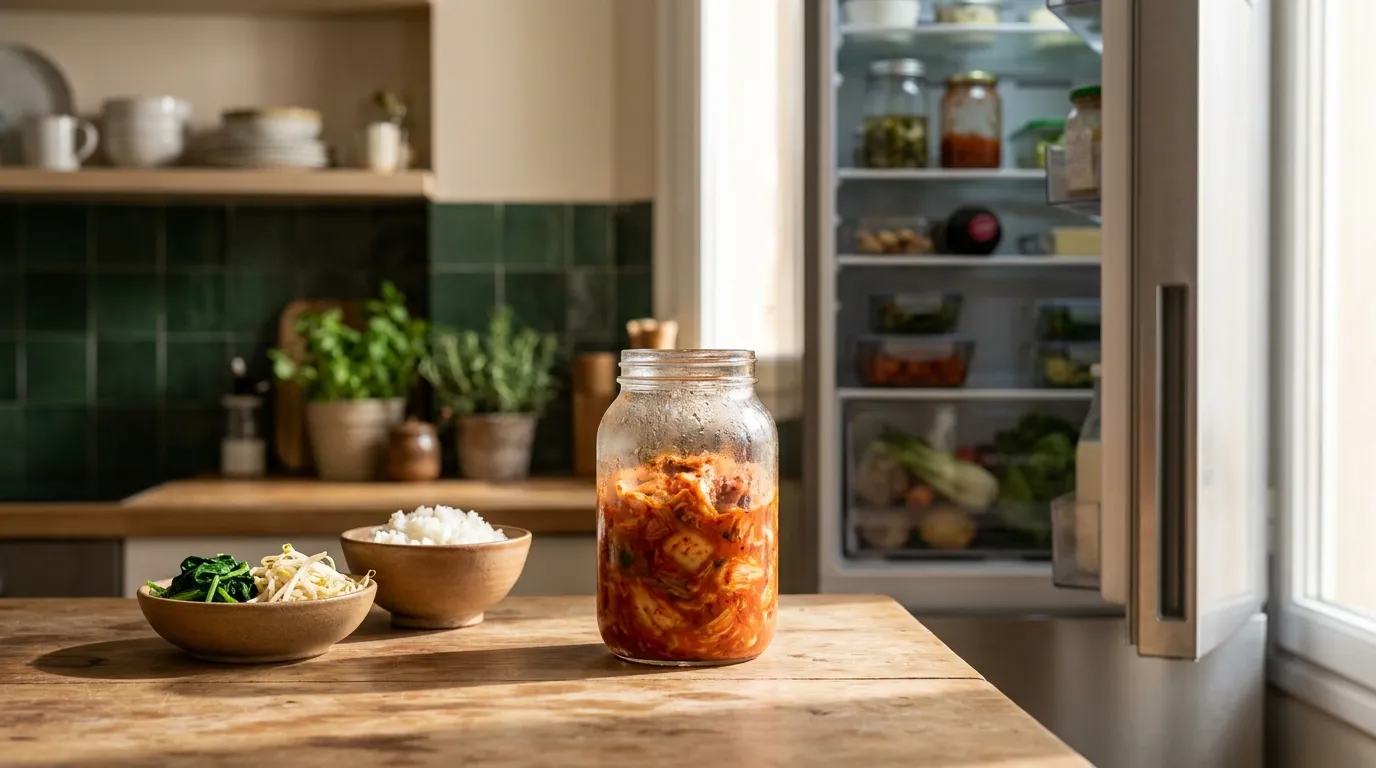
Kimchi is one of those foods that seems simple until the jar is open and the questions start about how long does kimchi last. Is it still fresh? Should the smell be stronger now? Has it gone bad, or is it just fermenting more? If those thoughts have come up before, that’s completely normal. Kimchi changes over time, and that’s part of what makes it special, even if it can feel a bit confusing at first.
The short answer is this: how long does kimchi last depends on how fermented it was when you bought it, how cold it stays in storage, and how it’s handled after opening. Fresh kimchi and mature kimchi usually don’t need the exact same storage approach. It’s a small difference, but here it often makes a real impact. That’s why understanding kimchi storage and kimchi shelf life matters just as much as choosing a good jar in the first place, even though people often overlook that part.
For shoppers in Barcelona, where many people order fresh small-batch foods for home delivery or pickup, this can be especially useful. Great flavor matters, of course, but safer storage and less waste matter too. It also makes opening the jar feel much more simple each time. In this guide, readers will learn how long kimchi lasts, what the different fermentation stages mean, how to store it properly, and when older kimchi is often better for cooking instead of eating fresh.
The real answer to how long does kimchi last
Kimchi does not have one fixed shelf life. It keeps changing because fermentation continues, even in the fridge, just more slowly. For food safety, the main issue is acidity. Guidance from the British Columbia Centre for Disease Control says kimchi should reach pH 4.6 or lower to be considered safely fermented, and that is usually the part that matters most here.
<DataTable headers={["Kimchi safety point", "Figure", "Context"]} rows={[["Fresh kimchi refrigerated use window","3 days","Use quickly while still very young"],["Time to reach pH 4.6 or lower in refrigerator","7 days","Maximum target under refrigeration"],["Time to reach pH 4.6 or lower at room temperature","3 days","Maximum target at ambient temperature"],["Recommended refrigerated hold before raw sale","2 weeks","After fermentation for commercial distribution"],["Critical acidity threshold","pH 4.6","Key food safety benchmark"]]} caption="Key kimchi shelf-life and safety numbers" />
That is why the answer is not simply “kimchi lasts months.” Fresh kimchi can still have a pH above 4.6, so it needs careful refrigeration and should be eaten fairly soon. The BCCDC specifically says fresh kimchi should be used within 3 days if it has been kept continuously refrigerated.
Fresh kimchi ... requires continuous refrigeration as pH may be >4.6 allowing pathogens to grow.
Once kimchi becomes more acidic, it is usually more stable. Even then, the quality still changes, and most people notice that pretty easily. Well-stored kimchi often stays good to eat for weeks, and sometimes longer, but the taste and texture keep shifting over time. It usually starts crisp and bright, then gradually turns softer and more sour.
Knowing the four kimchi fermentation stages
A lot of kimchi shelf-life confusion comes from treating every kind of kimchi the same way, which happens a lot. It usually makes more sense to think about it in stages. Simple, really, and easier for you.
Stage 1: Fresh or very young kimchi
This is newly made kimchi. It tastes fresh, crunchy, and not very sour, which lots of people probably enjoy. From a safety point of view, this stage usually lasts the least time. In most cases, it should stay cold the whole time in the fridge. It’s best to eat it fairly soon.
Stage 2: Actively fermenting kimchi
At this stage, the lactic acid bacteria are really active. You’ll probably notice bubbles, which are usually a good sign, and the lid may feel a bit more pressurized. The smell gets stronger, and the sour taste starts to build. In most cases, that’s normal. Under guidance, kimchi should reach pH 4.6 or lower within 7 days under refrigeration or within 3 days at ambient temperature.
Stage 3: Mature fermented kimchi
This is probably the stage many kimchi fans enjoy most. The flavor is deeper and tangier, with a taste that usually feels more balanced, which is likely why many people like it. Really satisfying. It still works well as a side dish, and with rice bowls or noodles, so there are options. Commercial guidance also says it can stay refrigerated longer after fermentation when sold raw.
Fermented vegetable products, especially those with short-term fermentation periods of less than one week, are further recommended to be held for another two weeks before distribution and sale.
Stage 4: Older kimchi
This kimchi is softer and more sour now, with less crunch, which is totally normal. Eating it straight from the jar probably won’t be your favorite option anymore. It’s still really good in fried rice, pancakes, stews, soups, or even grilled sandwiches, and that’s often where it’s best.
Best kimchi storage tips when asking how long does kimchi last
Storing kimchi well is pretty simple, and a few small habits can make a real difference. If you live in Barcelona and order fresh food for delivery, especially in the warmer months, keeping everything cold can matter even more. The goal is simple: keep kimchi cold, clean, and covered in its own liquid.
One of the biggest things that helps is keeping the jar in the back of the fridge, not in the door. Every time the door opens, the temperature changes, and that can speed up fermentation and shorten the time your kimchi stays at its best. In most fridges, the back is colder and more steady, so this small change often helps more than people expect.
It also helps to always use a clean utensil. A fork that has already been used at the table can bring in contamination, and even a tiny amount may affect the smell, texture, and shelf life sooner than expected. This is usually one of the easiest ways to keep kimchi tasting good longer.
Try to keep the cabbage and other vegetables submerged in brine as much as possible. When the top stays exposed to air, it can dry out, and the quality may drop faster. The brine helps protect both texture and flavor, so this step matters more in daily storage than it might seem.
The lid should be closed properly, but active kimchi can still build up gas in the jar. If it looks very full or especially active, open it carefully over the sink. That makes it easier to avoid spills and handle the pressure safely.
After delivery, it is best not to leave kimchi sitting out. If it arrives cold, put it straight into the fridge. For fresh, raw kimchi, reliable cold-chain handling is especially important in warm weather.
According to Illinois Extension, once fermentation is complete, fermented foods should be kept in the refrigerator. This slows fermentation and helps preserve quality. That is why artisanal brands that make small batches fresh to order, like Hellyn's Kitchen, still need to be treated like chilled food at home, not something to keep in the pantry.
Signs your kimchi is aging normally and signs it is not
Kimchi is supposed to smell fermented. That strong, sour, garlicky smell is usually completely normal. Because of that, people often worry too early and throw out kimchi that is still perfectly good. As it gets older, normal changes can include more tang, a softer crunch, extra bubbles, more liquid, and a stronger smell that can seem a bit intense. In many cases, that is simply how kimchi changes while it sits.
Normal changes include:
- a more sour taste over time
- softer cabbage
- more liquid in the jar
- fizz or pressure from active fermentation
- a deeper, funkier aroma
These signs do not automatically mean spoilage. Very often, they just show that fermentation is still going the way it should in the jar. In this case, that is usually expected.
So what should make someone pause and check more closely? The main thing to watch for is clear contamination, not just a bold taste or strong smell. Real warning signs include visible fuzzy mold, strange colors that clearly do not belong, a rotten odor instead of a sour fermented one, or obvious contamination from dirty utensils and poor storage, which is often the real problem.
A simple home example helps make this easier to understand. Imagine buying one jar and eating from it slowly over three weeks. If clean chopsticks or a spoon are used every time, it stays cold in the fridge, and the vegetables are pressed back under the brine, it may get more sour and still remain very usable. But quality can drop much faster if it sits on the counter for long periods or gets handled carelessly.
For many home cooks, the main mistake is not keeping kimchi too long. More often, the bigger issue is poor storage. And if it becomes too sour for eating fresh, it does not need to be thrown away. Fried rice or stew are both good ways to use it.
Why kimchi shelf life matters more now
Kimchi is no longer just a niche food. It now sits within a bigger shift toward fermented foods, vegan options, Korean cooking, and gut-friendly eating. Market reports make that pretty clear. Fortune Business Insights estimated the global kimchi market at USD 5.53 billion in 2025, rising to USD 5.81 billion in 2026, with more growth expected after that. Korea's kimchi exports also reached USD 164.4 million in 2025.
Those figures show that more people are buying kimchi, but they also point to something practical: fresh kimchi is a cold-chain food, and that detail really matters. When shoppers understand kimchi storage a little better, buying feels easier and more predictable, especially for local delivery orders or when picking up more than one jar at a time.
For shoppers in Barcelona, this shows up in a very clear way. A small-batch jar made locally can give you fresher flavor and more natural fermentation, yet it still needs careful handling once it reaches the kitchen, often more than people expect. Buying in bulk can work well if you plan ahead. You will want enough fridge space. One smart step is to keep older jars near the front. Then use the more mature jars for cooking first, for example in fried rice or stew.
That is also why local pickup and delivery often feel easier than long-distance shipping for fresh fermented foods, especially when the goal is to keep the jars cold and steady during transport.
How to use kimchi at each stage without wasting any
One easy way to think about kimchi shelf life is to match each stage with the kind of meal that suits it best. That usually helps cut down on waste and lets you enjoy the whole life of the jar, which is probably the point anyway. It’s a simple system, and in real life it works pretty well.
Fresh kimchi is great in side dishes, rice bowls, wraps, or simple plates when a bit of crunch is the main thing you want. Kimchi that is still actively fermenting works well in sandwiches, noodle bowls, and savory pancakes, and that in-between stage is often especially good. Mature kimchi goes well with tofu, eggs, grilled vegetables, or stir-fried rice. Older kimchi tends to work best in stew, soup, fried rice, and braised dishes, where the deeper sourness has more room to come through. That way, very little needs to go to waste.
If kimchi is something you buy often, keeping two jars around can make things easier: one newer jar for fresh eating and one older jar for cooking. In most cases, the newer one stays in the fridge for side dishes and bowls, while the older one ends up in fried rice, soup, or stew. Repeat buyers often find this easier than trying to catch a single jar at exactly the right moment every time. It’s usually less hassle.
For people trying authentic homemade Korean kimchi in Barcelona, Hellyn's Kitchen can fit into that routine nicely because small-batch ordering makes it easier to buy for an actual week instead of building up a random pantry stockpile. And if you want a local source, a Barcelona small-batch kimchi brand can make it easier to get fresh jars and age them at home based on how sour you like them, which is arguably one of the nicer ways to do it.
The bottom line for safer, better kimchi and how long does kimchi last
So, how long does kimchi last? The clearest answer is that kimchi lasts in stages, not by one fixed number. Very fresh kimchi is best treated like a short-life food and kept refrigerated the whole time, pretty much from start to finish. Safety guidance gives 3 days for fresh refrigerated kimchi, with a target of pH 4.6 or lower as fermentation keeps going. After that point, kimchi can often still be used much longer in the fridge, although its flavor and texture will continue to change with age, which is usually completely normal.
For better kimchi storage, keep it cold, place it at the back of the fridge on the lower shelf, use clean utensils, and make sure the vegetables stay under the brine. That step often makes a real difference. Kimchi should not be judged by sourness alone, since sour usually means it is older, not spoiled. And when the flavor gets too strong for eating fresh, that is often exactly when it works really well in fried rice, stew, or pancakes.
If shopping in Barcelona, a smart approach is to buy from a source that handles cold delivery well and then store the jar carefully at home. Good habits usually help, and the difference is often easy to notice. Understanding kimchi shelf life and the different fermentation stages can help reduce waste and make meals better in most cases.