
How to Eat Kimchi: Easy Serving Ideas for Every Meal
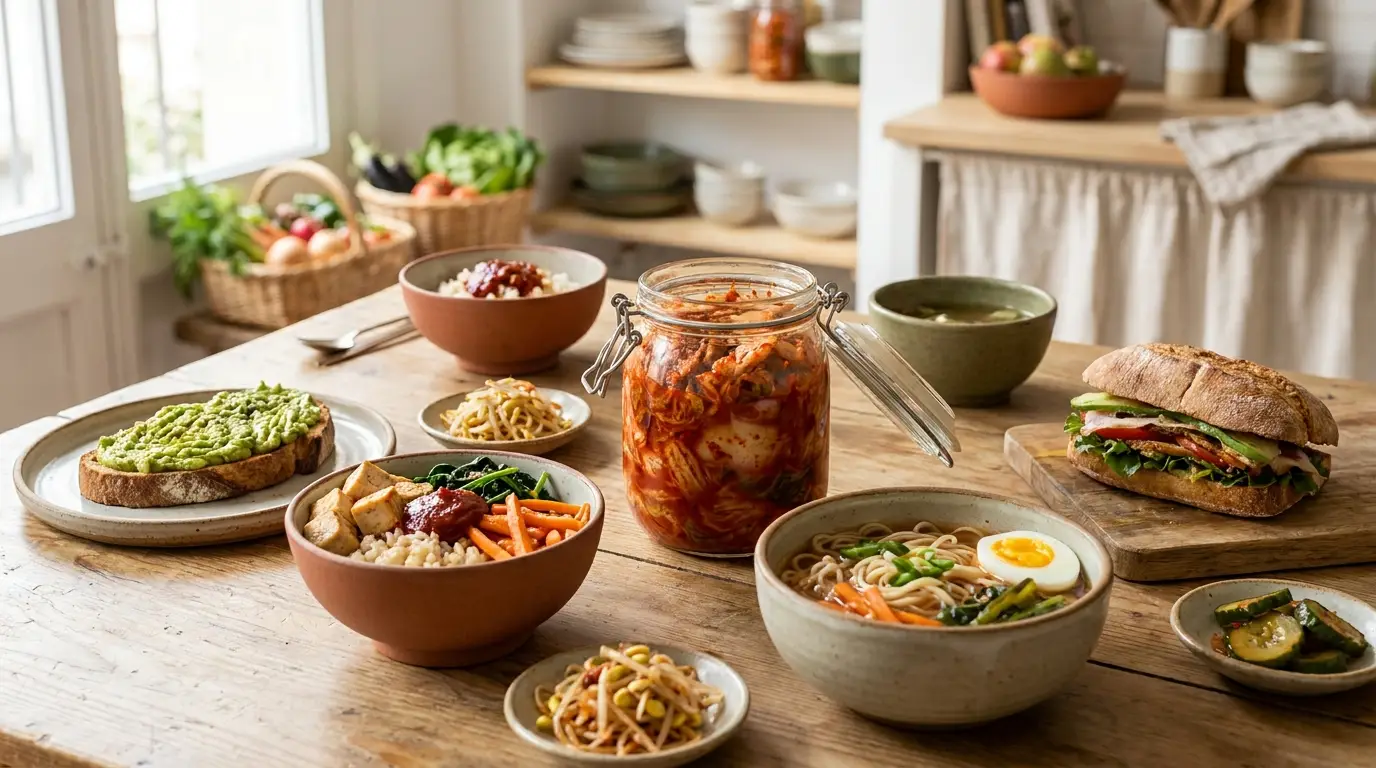
If there’s a jar of kimchi in the fridge and the same question keeps coming up about how to eat it without falling back on another bowl of rice, that’s a pretty common situation. A lot of people buy kimchi because they love the flavor, want to add more fermented foods to meals, or are just curious about Korean cooking, which makes sense. Then the jar ends up sitting there, and the question stays the same: what do you actually do with it?
The good part is that kimchi is very easy to use. It’s bold, crunchy, sour, spicy, and full of flavor. Even a small amount can wake up a simple meal fast. A bigger spoonful can easily take over the whole plate, usually in a good way. It also doesn’t take advanced cooking skills to make it work. And it doesn’t have to stay only in Korean recipes, which often makes it even easier to use regularly.
In this guide, readers will find practical kimchi serving ideas for breakfast, lunch, dinner, snacks, and party food. It focuses on useful, everyday options. It also covers how much to serve, which foods go well with it, simple mistakes to avoid, and easy ways to make this classic korean side dish part of daily life in Barcelona or wherever someone lives. So whether someone is new to kimchi or already buys it often, this guide is here to help them use every last spoonful, which is honestly a pretty good goal.
Start with the easiest way to serve kimchi
The easiest answer to how to eat kimchi is simple: serve it cold, straight from the jar, next to food that feels plain or rich, with nothing fancy. In Korea, kimchi is often treated as a korean side dish instead of some complicated recipe, so there’s usually no need to think too hard about it.
A good place to start is 2 to 4 tablespoons per person. That gives enough flavor without taking over the whole meal. If someone already likes spicy, tangy foods, they may want a little more. But for anyone new to fermented foods, starting small is usually easier and often feels less overwhelming.
Kimchi usually works best beside another food, especially when that food needs a little brightness. In most cases, you can try it with:
Foods that pair well with kimchi
- Steamed rice, including brown rice
- Noodles or ramen
- Eggs
- Avocado toast
- Grilled tofu
- Roasted potatoes
- Sandwiches and wraps
- Burgers, veggie burgers, hot dogs, or even a simple roll
- Grain bowls
- Cheese toasties or grilled sandwiches
It’s a pretty simple pairing, really. Kimchi brings acid, salt, heat, and crunch, which is a lot in one bite, honestly. That mix usually works especially well with heavier foods because it cuts through richness. It also helps wake up milder foods that might otherwise taste a little plain. When a meal feels flat, kimchi can often fix that fast by adding contrast and making each bite feel a bit more lively.
If you're also curious about the food itself, this guide to kimchi benefits gives some helpful background on why fermented foods are so popular, and it explains that pretty clearly.
How to eat kimchi for breakfast: fast ideas that actually work
Breakfast probably isn’t the first meal most people think of for kimchi, which is fair enough. But it can work really well in the morning. Breakfast foods are often soft, creamy, and pretty mild, so kimchi adds a nice contrast and usually makes the whole meal feel much less boring, which honestly helps.
A few easy kimchi serving ideas for breakfast:
Add it to eggs
This is a really popular way to eat kimchi. Just chop a little and mix it into scrambled eggs; it’s honestly so easy. Or add a spoonful on top of a fried egg with toast. The heat from the eggs usually softens the kimchi just enough, while the flavor still stays fresh.
Put it on avocado toast
Spread avocado on toast, then add chopped kimchi, sesame seeds, olive oil, and a little salt; it’s really easy. It tastes fresh and creamy, but the sharp kick usually comes through right away too.
Use it in a breakfast rice bowl
A breakfast rice bowl can be ready in just minutes, which is really nice: leftover rice, sautéed greens, a fried egg, and kimchi make it filling. It’s honestly so easy, and if you want more protein, you can add tofu too.
Mix it into a savory pancake or toastie
Kimchi melted into a cheese sandwich is simple and really satisfying, and it can make a great lunch too. If you like cooking, kimchi pancakes are another classic option you’ll probably enjoy.
A helpful tip is to start with small breakfast portions, just to see how it feels. A few bites are often enough, so the kimchi wakes up the meal without taking over, which usually works better first thing in the morning.
Lunch and dinner meals where how to eat kimchi feels simple
Once kimchi starts to feel familiar as a side, it usually gets easier to make full meals around it, and that’s often when it gets more fun. That’s when a lot of home cooks really start to enjoy it. And it can stay traditional, or fit into the everyday food they already make, which is usually pretty simple.
Rice bowls and grain bowls
This is probably one of the easiest lunch ideas. Make a bowl with rice, quinoa, mixed grains, or greens, using whatever you have on hand. Add roasted vegetables, tofu, cucumber, and a spoonful of kimchi. Finish with sesame oil or a simple soy dressing, which is usually plenty.
Noodle bowls and ramen
Kimchi and noodles usually taste really good together. It’s super easy to add kimchi to instant ramen or udon noodles. Stir it in at the end for a fresh, crunchy bite, or cook it briefly for a deeper, richer flavor.
Fried rice
Kimchi fried rice is a classic for good reason. Slightly older kimchi often works even better, because its stronger flavor comes through in the whole pan. Add leftover rice, onions, carrots, and tofu or egg, whatever you have on hand.
Sandwiches, burgers, wraps, and sandwiches
Kimchi works really well in modern comfort food. You can try it in a veggie burger, grilled cheese, falafel wrap, or a simple hummus sandwich, it often just works. It’s easy to use and can replace pickles while adding more flavor.
Soup and stew toppings
A spoonful of kimchi on hot soup adds brightness and texture, and it’s especially good in brothy bean soups, miso-style soups, simple vegetable stews, and other light bowls, mainly the brothier ones. It’s a really nice touch.
If kimchi gets used often, it helps to know how the flavor changes over time, since that usually makes it easier to match with different soups. This guide on kimchi storage and fermentation stages explains that in a clear, simple way, which really helps.
Smart ways to use how to eat kimchi as a korean side dish at home
If meals at home should feel a bit more like a Korean table, it often helps to think in small dishes. A korean side dish is not always the main part of the meal. It is small, but still important. It sits beside rice, soup, or grilled meat and helps round out the table. That is why kimchi fits so well in everyday home cooking.
A simple way to start is serving kimchi in a small bowl on the side:
Simple home meals
- Rice with roasted vegetables
- Tofu with soy sauce and sesame oil
- Baked sweet potatoes
- Grilled mushrooms
- Pan-fried dumplings
- Plain noodles with a little oil and spring onion
This kind of meal takes some pressure off, which is honestly nice. There is no need to find one perfect recipe. Usually, it is enough to have a main food, maybe one or two sides, and a spoonful of kimchi.
A simple example is a weeknight dinner in Barcelona after work, nothing fancy. Roast some potatoes in the oven, cook tofu in a pan, slice tomatoes, and put kimchi on the side of the plate. The whole meal often feels more balanced right away. It works really well for lunchboxes too. Pack rice, some greens, a protein, and a small separate container of kimchi.
One mistake people often make is mixing kimchi into every part of the plate. It is usually better to keep some of it separate. That helps it stay crunchy, and each bite feels a little different.
For people buying fresh jars from Hellyn's Kitchen, this simple side-dish approach is often the easiest way to enjoy small-batch kimchi regularly at home.
Common mistakes to avoid when figuring out how to eat kimchi
Kimchi is easy to enjoy, but a few small mistakes can make it a bit less enjoyable sometimes. It’s usually not a big deal, and the good news is that, in most cases, those problems are pretty easy to fix.
Using too much too soon
If you're new to kimchi, it helps to start small. Having too much at once can overpower the rest of the meal and quickly take over. Try a few bites first, then add more if it feels right.
Pairing it only with Korean food
Authentic Korean meals and kimchi are a great match, that’s true. But kimchi is also really good in tacos, toasties, grain bowls, and salads, often even better than you might think. So usually, don’t limit it to just one kind of meal.
Heating every serving
Cooked kimchi is delicious. Raw kimchi has a fresher crunch, which is nice. Try both. Some meals probably work better with one style or the other.
Forgetting texture balance
Kimchi is usually best with soft or rich foods. Think rice, eggs, noodles, potatoes, tofu, cheese, or creamy spreads, where that contrast really helps. Similar foods work too.
Letting good kimchi go unused
Lots of people buy a jar with good intentions, then forget about it for a bit, it happens. One easy fix is to pick a regular habit and keep it simple. Add kimchi to lunch bowls, for example, and have it with dinner a few nights each week. Small routines often help finish the jar instead of letting it go to waste.
Easy weekly plan: how to eat kimchi during every meal
If someone wants an easy way to make kimchi part of everyday life, a simple weekly routine is often a good place to start. It’s really easy and can help whether they cook at home, order in, or just want fewer food choices, which probably helps too.
A realistic way to use one jar
Monday breakfast: avocado toast with chopped kimchi
Tuesday lunch: rice bowl with tofu, cucumber, and kimchi
Wednesday dinner: kimchi fried rice with leftover vegetables
Thursday snack: crackers with hummus and a small side of kimchi
Friday dinner: veggie burger or sandwich with kimchi instead of pickles
Saturday brunch: scrambled eggs with kimchi on toast
Sunday dinner: noodle bowl with mushrooms, greens, and kimchi
This kind of plan works because kimchi can fill a few different roles during the week. On some days, it goes right on top of toast, rice bowls, or eggs, which is often the easiest way to use it. On other days, it stays on the side, where even a small amount works well. Then, once in a while, it brings most of the flavor, like in fried rice or a noodle bowl. That small shift often helps meals feel less repetitive.
For local shoppers, that can make buying easier too. It helps to plan around one jar for personal use, or buy more if the household already eats a lot of kimchi. Hellyn's Kitchen is especially useful for people in Barcelona who want fresh-to-order kimchi with easy pickup or delivery instead of checking multiple shops. In many cases, that saves time, especially when comparing stores is the part people want to avoid.
Make how to eat kimchi part of your everyday table
Learning how to eat kimchi doesn’t mean you need to learn a lot of new recipes. It’s mostly about seeing kimchi for what it already is: a flexible, flavorful food that works with almost any meal, which is probably why it’s so easy to keep using. Serve it as a korean side dish with rice and tofu, spoon it over eggs or toast, or mix it into fried rice, noodles, wraps, and sandwiches. Keep the portions simple and let the flavor do the work.
Usually, the best kimchi serving ideas are the easiest ones. A good place to start is with foods already in the weekly routine. When a meal feels like it needs more crunch, a little brightness, or something to wake it up, that’s often where kimchi works best: next to rice and tofu, over eggs or toast, or mixed into noodles and fried rice. It really can be that simple.
If someone is just getting started, it helps to pick a couple of ways to use it this week, maybe breakfast and lunch or lunch and dinner. That’s often enough to get comfortable with it. If kimchi is already a favorite, try adding it to more everyday meals so the jar starts to feel like part of the routine instead of something used only once in a while, since that shift usually makes regular use easier.
For anyone in Barcelona looking for fresh homemade kimchi, Hellyn's Kitchen makes it easy to keep a good jar on hand. There are also local ordering options through their small-batch homemade kimchi shop.